C414 Aircraft - Initial climb increased by at least 200 FPM to more than 1000 FPM. Cowl flaps can be fully closed for cruise on even ISO +30 degrees F days, while the cylinders rarely go much over 400 degrees F. At full gross takeoff weight, I see normal 69 percent power cruise speeds in the 195 to 205 KTAS range in
the flight levels. Down low below 10,000 feet, things are much slower, more like 170 to 175 KTAS. Fuel burn is the same, 34 GPH in cruise at all altitudes, with the RAM VII at 69 percent.
C414 Aircraft

Beginning in 1978, Cessna offered three basic equipment packages. In addition to the bare-bones model and the ARC 400-equipped 414AII, there was a III version with ARC 800- and 1000-series avionics, a Bendix RDR 160 weather radar and 100-amp alternators.
The 421s longer nose was also grafted onto the 414A, making room for an extra 410 pounds of baggage and avionics. All told, the maximum useful load was boosted by about 200 pounds and an eighth seat was added to the options list.
Pressurization differential was increased to 5.0 PSI to enable the airplane to maintain cabin altitudes of 10,000 and 11,950 feet at cruising altitudes of 26,500 and 30,000 feet, respectively. (RVSM rules have generally limited 414s to 28,000 feet.) Limiting speed for the extension of 15 degrees of flap was raised from 164 to 177 knots;
Vlo and Vle were increased to an impressive 177 knots, from 143 knots. Any purchase of a Cessna twin-pressurized and non-pressurized-requires greater detailed analysis, airplane by airplane, than any other models. Each model has different after-market engine/prop conversions and when other performance-enhancing modifications are factored in, weights and other performance criteria vary.
Frequently, a buyer makes assumptions that are not correct. For example, the 414 may be powered by a standard 310-HP engine, a 325-HP RAM Series IV or a 335-HP RAM VI or VII. Straight 414s with only 310-HP standard engines or even with a 325-HP RAM Series IV conversion will often have low useful loads.
With 1000 pounds of fuel, the payload may be 400 to 600 pounds. This can be a great aircraft and a good buy, but only for a pilot who doesn't need lots of payload. However, a 414 RAM VI and VII can often have an excellent useful load with an impressive range/payload chart.
Kudos go to Cessna for rising to the occasion. They dedicated an engineer to my problem and working with my maintenance shop, they developed an approved repair for my wing, possibly saving the ship from the scrap yard!
While bad quality procedures in Wichita back in 1979 had probably caused my problem, the current staff at Cessna really impressed me with their efforts to help save this 27-year-old ship. Their parts may seem expensive, but they continue to support us owners, and for that I am very willing to see them earn a fair profit.

I have split my time about equally between the RAM IV 325-HP engines and the RAM VII 335-HP engines and Scimitar props that I had installed when the RAM IVs hit their TBO. What a difference!
The RAM IV struggled in the flight levels, especially in the summer. To keep CHTs below the red line I had to fly at no more than 55 percent power and with the cowl flaps open at high altitudes.
After the Chancellor debuted, there were few further refinements. One of the most important was the switch in 1979 to TSIO-520-NB engines, which have improved crankshafts. Four years later, Continental incorporated some changes to the -NBs cylinders, valve lifters and piston pins, and increased the engines recommended TBO from 1400 to 1600 hours.
Continental also published overhaul procedures to enable -NB engines to get the TBO boost. We spoke with Michael Cook and Todd Voshell who direct maintenance at Rapid Air, in Grand Rapids, Michigan, which has been operating 300 and 400 series Cessna twins for over 25 years.
Both were quick to praise the 414 and especially the 414A as the best of the Cessna piston twins, with good systems, particularly the hydraulic gear on the 414A. They said that the Cessna inspection procedure manual for the airplane is one of the best such manuals written.
If followed carefully, a mechanic won't miss anything. Areas to watch on the pressurization system are to make sure the nine drain seals are changed regularly as they deteriorate and become brittle and to regularly check the pressurization ducts off of the heater, forward of the forward pressure bulkhead as they can develop major leaks.
Cessna borrowed components from existing 400-series airplanes to come out in 1970 with a model to bridge the price gap between unpressurized and pressurized twins. It had basically the same tail and "wide-oval" fuselage as the 421B, and the 401s wing.
The engines were adapted from those used on the 401 and 402 models - the differences were intercoolers and provisions for bleed-air cabin pressurization. List price was $138,000 (that's over $740,000 in 2007 dollars)-$35,000 less than the Duke and some $50,000 less than both the 421 and Pipers P-Navajo.
The big cabin, wider than it is tall, makes for comfortable seating and copious luggage space is the 414's forte. There is enough room in the aft cabin, the nose and wing lockers of a 414 to hold 930 pounds of luggage.

With its bigger nose and lockers, the 414A can carry 1500 pounds. Loading must be watched carefully to avoid going out of the rear CG limit. The nose baggage compartment of the 414A made CG juggling easier.
Chancellors are as roomy as 421B/Cs. A 414A RAM Series VII with Winglets (AW) will compete in many ways with a 421C. The efficiency of the 414As long high-aspect ratio wing is highlighted by noting the 414As single-engine service ceiling is 19,850 feet.
The 375-HP 421Cs single engine ceiling is 14,900 feet. I own a 1978 Cessna 414A which I acquired in 1989. During that period, I have exchanged two sets of engines (RAM IV), two props (one new set), two paint jobs, an interior and updated the avionics.
Insurance costs have equaled $7,000 per year for the last couple of years for $1 million smooth with a hull value of $350,000. A simpler fuel system was among a host of improvements unveiled in 1978 with the introduction of the Model 414A Chancellor.
Tip, aux and locker tanks were obviated by a 4.5-foot longer, bonded wing holding 206 gallons of usable fuel in internal bays. Controls consisted of on/off/crossfeed valves and a fuel flow computer/indicator was added. Owner-pilots give high marks to cockpit room and layout of system controls and are enthusiastic about handling characteristics.
The 414 and 414A share the distinctive silky smooth, control response of the other 400 series Cessnas. They are the Cadillacs of the piston line, with attention having been paid to detail; even on an Today, prices range from around $160,000 to over $400,000 for typically-equipped 414s with mid-time engines.
Operating and maintenance costs are attractive when compared with those of competing airplanes, such as the big-brother 421 and Beech Aircrafts Duke. Among the most popular mods are the RAM Aircraft Corporation engine swaps. Four variations are available, all of which offer a boost in useful load, increased TBOs and new props.
The top of the line for the 414 is the series VI. In addition to 335-HP engines, new props and intercooler scoops, it includes a set of vortex generators and gives an increase in useful load of 415 pounds.
Owners of 414As can opt for the series V conversion, which includes Continentals 350-HP liquid-cooled Voyager engines, which have a TBO of 2000 hours. RAM also makes winglets and vortex generators. (See www.raaircraft.com.) Utility twin aircraft.

In service since 1969. Less powerful, light and low cost model of CESSNA 421 Golden Eagle. Features wing of CESSNA 402 and fuselage of CESSNA 421. Improved version CESSNA 414A Chancellor (appeared in 1978) with bonded wet wing, without tip tanks.
Remained in production until 1985. The 414A has an excellent safety record for good reason. It is a very stable instrument platform and I find it as easy to land as the T310 or any of the large singles I've flown.
The crosswind characteristics are good, and its easy to make squeaker landings. Im required to attend an approved school for recurrent training. Its an excellent idea, regardless of how much time you have. I use SimCom.
Despite that, cylinder head cracking has been a persistent problem for the -N and -NB engines (as well as for other IO-, TSIO- and GTSIO-520s). An AD issued in 1986 requires cylinders to be pressure-checked for leaks every 50 hours until the engine has accumulated 500 hours.
That resulted in cruise speeds of only about 180 to 185 KTAS up high. Mandatory power reductions during the climb above FL220 meant long climb times and getting above FL250 seemed to take forever at the 200 FPM climb rate that could be achieved up there.
The RAM VII changed all that. With bigger turbochargers and intercoolers, much larger cowl flaps, new intake air scoops, and Scimitar props, the airplane becomes an entirely new animal within seconds of leaving the runway. This makes room in the mains because all return fuel and steam from the engines is routed back to the mains rather than to the selected tank.
To get at the fuel in the wing locker tanks, it must first be transferred to the mains. Before doing so, however, the pilot has to ensure there are fewer than 20 gallons in each main (tip) tank.
Fuel transferred too early is pumped overboard. The system left room for error, not only on the part of the pilot, but among line personnel. When told to "top off the mains," a line person may not realize that the mains are the tip tanks and will fuel only the aux tanks.
Pay attention to the fuel system in tip-tanked 414s. All told, Cessna built nearly 1,000 of the airplanes—roughly a 50/50 split between early tip-tanked 414s and wet-wing 414A Chancellors—during 16 years of production. Once in service, the airplanes became popular as workhorses for small charter and corporate flight departments, as well as comfortable transports for private owners.
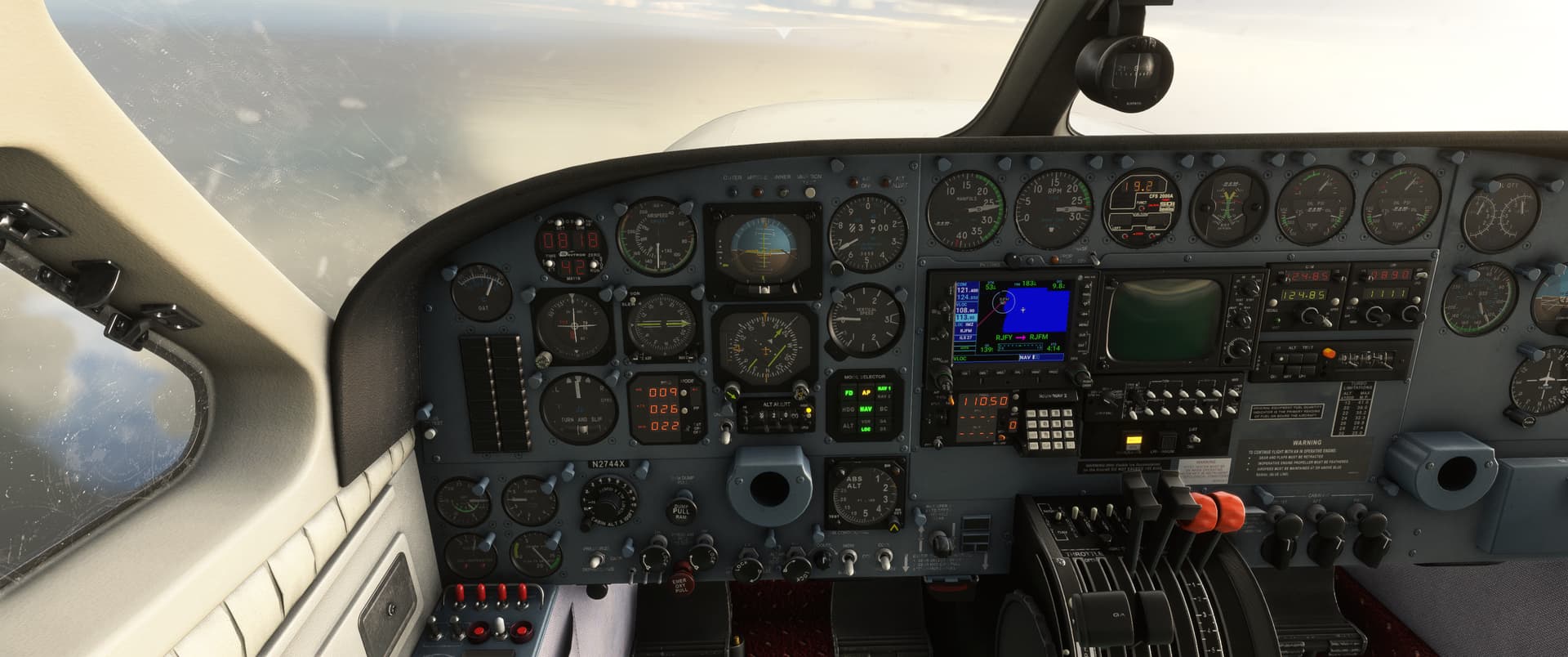
Much has been written about the 414s, but its no big deal. Give me one three-hour cross country with any new owner and hell be able to teach the system. Admittedly, the 414As wet-wing fuel system is an improvement and is simplified.
The hydraulic landing gear, with its high gear speed is a great by-product of the wet wing. Some low-time pilots might be approved for 340 insurance, but rejected for a 414/414A. Go figure. The 414 and 414A truly provide a great family or business aircraft.
Lots of external baggage in the nose and wing lockers, a pressurized aft cabin baggage area for desired in-flight items, like food, toys/games, cosmetics and a roomy pressurized 6000-foot cabin at 20,000 feet. A potential buyer should carefully investigate the compliance status of the airplane by flight time and serial number, especially if the airplane is high time.
The exhaust system sees a great deal of heat and vibration, thus components wear out. An exhaust leak is a critical item on a turbocharged airplane and can lead to a serious fire in flight. (See page 25 for an abbreviated AD list.)
It is important to note that a 414 is 7 knots slower than its little brother, the 340, which has the same engines and many of the same systems, but a noticeably smaller cabin. So, if its just pressurization youre looking for and youre going to be flying with only one other person or two aboard, you might want to look at the 340 for a personal hot rod.
I have owned and flown a 1979 Cessna 414A for 14 months, accumulating 235 hours in all sorts of conditions. I bought it to replace a nice Cessna T310R, which I flew for about a year.
The upgrade from the T310R came about because my family, including a dog, cannot all be wearing nosebags. The pressurized comfort of the 414A, which produces an 8000-foot cabin at 22,800 feet, cannot be overemphasized. It is the flying carpet my wife always wanted, including a potty!
The winglet mod works; I typically get 215 to 218 knots at mid-weight at FL220, running 72 percent power. Single-engine performance at sea level is average; about 240 FPM for the 414 and 290 FPM for the A model.
At 11,350 feet, the 414's single-engine service ceiling was a bit below average; but, at 19,850, the 414A is tops in its class. Fuel cost per hour: (38.0 gallons/hr @ $5.40/gal) That year, most limiting and recommended airspeeds were boosted a few knots (except Vmc, which was lowered from 84 to 82 knots), and the -J engines were replaced with TSIO-520-Ns.
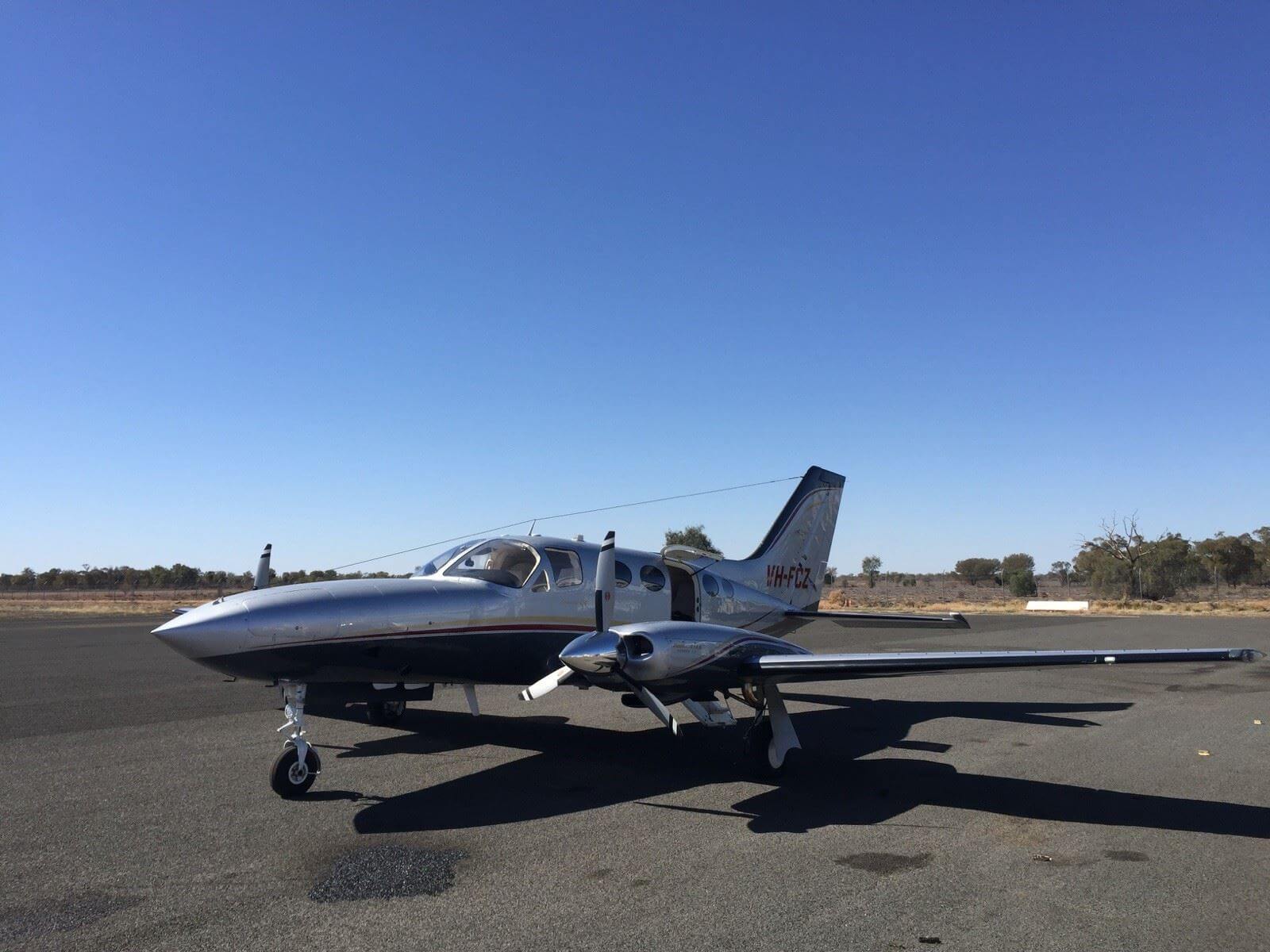
The difference is that an -N engine uses 38 inches of manifold pressure, rather than 36 inches, and 2700 RPM to produce its rated 310 horsepower. Standard usable fuel capacity of early 414s was 100 gallons (50 in each tip tank).
Optional auxiliary and locker tanks were available to boost usable capacity to 180 gallons, then to 203 gallons in 1973. The current concern is with wing spar cracking in high-time airplanes; with a series of ADs calling for inspections and modifications to the spar-compliance is expensive.
One owner reported discovering mis-drilled holes in the spar of his airplane when it was opened up to install the spar strap: ADs 2005-05-52 and 2005-12-13 are current. (As of this writing there is an alternative method of compliance published by the FAA in CE-05-35.)
Boost pumps seem to be a weak point, requiring what seems to be frequent replacement. The deice light on the panel illuminates only very briefly when the pneumatic deicing system is activated and only indicates that there is pressure to the tail boots.
The switch for that light is on the underside of a Tee fitting in the pressure line to the tail and thus fills with water, rust and crud and should be pulled and cleaned periodically, or it will fail.
Its an $800 part. With full tanks-enough fuel for nearly 4.5 hours with IFR reserves-a well-equipped Chancellor will have room left in its weight-and-balance envelope to accommodate six FAA-standard people with their toothbrushes. Load a six-person marketing staff with 800 pounds of equipment, and there will be room left for only about 1.5 hours of fuel.
They were the last of the pressurized, piston, 400-series airplanes Cessna developed, and pilots and mechanics will tell you that Cessna got it right with the Models 414 and 414A. Combining spacious cabins and relatively small, efficient engines, the 414 series can carry lots of fuel or a small crowd with their belongings - but not both.
Also, the big Cessnas have safety records that are unmatched by any other light twin. In the years following its introduction, the airplane saw few major changes. One of the most important came in 1973, when the cabin length was increased by 16 inches and a fifth side window was installed.
Electronic prop synchrophasers became standard equipment in 1976, when two versions of the airplane were put on the market: a bare-bones 414 and a 414II, which came with an assortment of ARC 400-series avionics equipment. Engines were 310-HP Continental TSIO-520-Js, and propellers were three-blade McCauleys.
According to Cessna, a 4.2-psi cabin pressure differential could be maintained by either engine operating at 60 percent power. Six seats were standard; a seventh was available as an option. Maximum takeoff weight was 6350 pounds;
max landing, 6200 pounds.
c414 aircraft fuel type, cessna 414 riley rocket, cessna 414aw, cessna 414 chancellor, cessna 414, cessna 414 range, cessna 414aw for sale, cessna 414a chancellor specifications